Blog
Rosanne Regan Hansel, MS.Ed.
"I haven’t given up the dream that one day (very soon, I hope), all children living in all parts of this world, will have enough to eat and a safe place to live with families who respect and love them, will receive the highest quality, affordable care and education from teachers who are respected and well-paid, and will thrive on a peaceful planet that has been nurtured and well-tended by its inhabitants."
3DCHILDHOOD
Interactive Workshops
Journaling the Joy, Beauty and Wonder of Nature
This workshop is designed to unleash the artist in each participant with a virtual (if not actual) walk through nature. Inspired by Joan Vorderbruggen's book "Wild Calm" on forest bathing and the ephemeral art of Andy Goldsworthy, participants are invited to create a simple blank art journal as a tool to connect with both mother nature and their inner creative nature. The session begins with a playful exploration of leaves, awakening the senses and opening possibilities for a journal cover design. A crayon resist technique using tempera paint is offered as one option. Participants are given pages to assemble for the art journal and materials to bind them. While waiting for the covers to dry, participants will title the pages in their art journals with suggested topics from a handout such as:
-
Appreciate Uniqueness: Find two leaves that appear similar in size and color. Record or draw as many subtle differences between these two leaves as you can.
-
Sketch Nature's Beauty: Take a walk outside. Select one beautiful object and sketch it.
-
Ephemeral Art: With a sense of curiosity and wonder, find and collect natural objects that have interesting textures, shapes and colors from a natural area near you. Have fun arranging these objects in a pleasing design. Take a photo or sketch your creation, but leave your creation behind to naturally decompose. This is ephemeral art.
Participants will take away a handout listing additional art journaling prompts to accompany their handcrafted art journals. Children can make these too with adult assistance!

IPA USA Conference
Kentucky Science Center
Louisville, Kentucky
October 23, 2025


Exploring the 3D World:
Strengthening Spatial and Math Skills with Open-Ended Materials and Activities
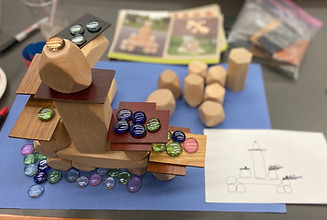
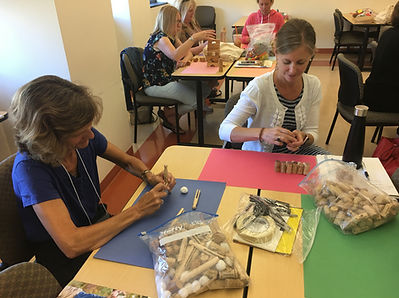
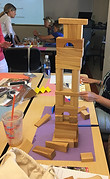
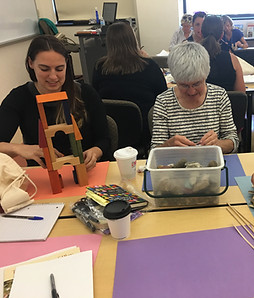
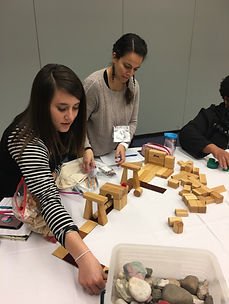
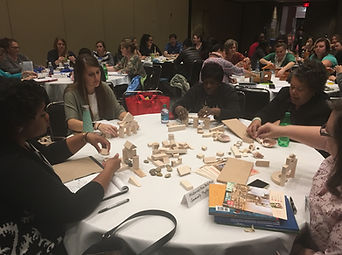
This workshop opens with an overview of the research that provides a strong rationale for teaching spatial skills in the early years. Knowing what specific spatial skills children should have and understanding what types of activities and materials to offer is reviewed along with inspiring ideas from preschool and kindergarten classrooms for creating intentional activities with open-ended materials to reinforce spatial skills. Participants in this session had the opportunity to playfully manipulate materials and with a focus on several of the six critical spatial skills introduced: 1. orienting, 2. symmetrizing, 3. visualizing, 4. composing, decomposing and transforming, 5. perspective taking and 6. map making. In these photos, participants composed structures with the construction materials provided and then drew their structures on the index card provided. They were given time to turn and talk, to reflect on the building activity and invited to share out. This was followed by an overview of why learning to draw is an important part of spatial skill development. The presentation concluded with "The Carnival Story" which provided examples from a kindergarten classroom with strategies to help children improve their spatial and math skills by encouraging practice and effort, and offering extended time and scaffolded support. Participants were given time to reflect on the story and using prompts from a handout to discuss with a partner and jot down ideas for guiding children's spatial learning. Looking at these smiling and engaged faces, one would never guess this workshop took place on a Friday at 5:00 pm!


Early Childhood Summit in State College, PA, October 28th, 2024


Invitation to Play:
Exploring 3D Materials that Engage Young Minds and Bodies
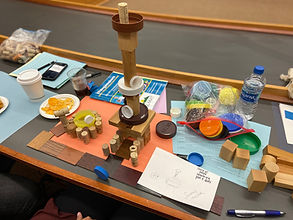
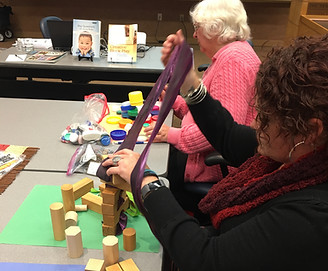
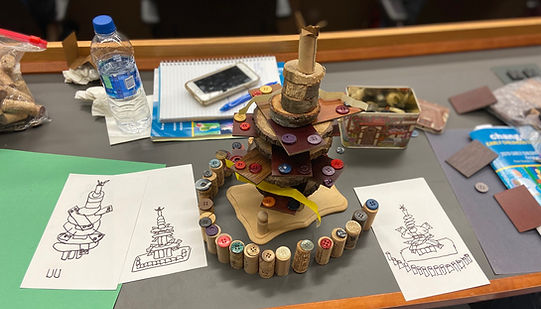
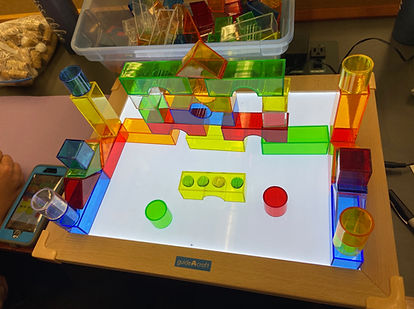
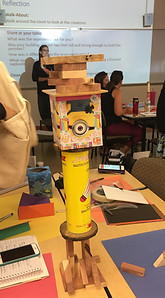
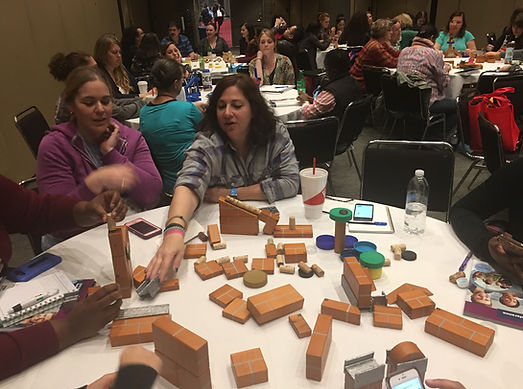
We know that children learn best through manipulation of three-dimensional materials using all their senses to make sense of the world around them. How can we best support children’s learning during these playful explorations? A PowerPoint presentation will begin with the benefits of play for young children and the brain research that stresses the importance of play. Participants will engage in an open exploration of three-dimensional materials such as blocks, loose parts, wire, cardboard and paper to experience first-hand the delight in play. After an overview of strategies for introducing materials and supporting children’s learning during play, participants will engage in a more focused exploration of the materials to target specific concepts and approaches to learning. Time for reflection, questions and discussion will be woven throughout the session.
Early Childhood Summit,
Penn State
.jpg)
P-3 Summer Institute, NY State Education Department,
Albany, NY
Guiding Deeper Engagement in Block Play:
The Role of the Teacher
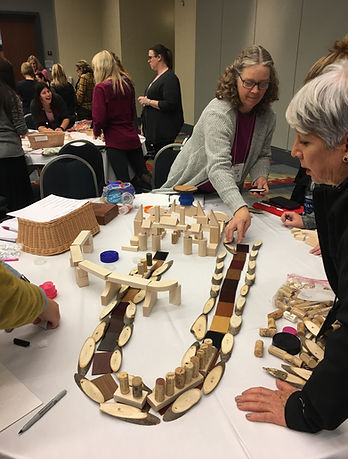
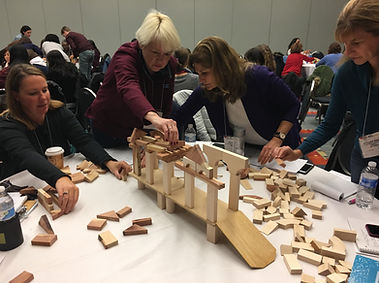
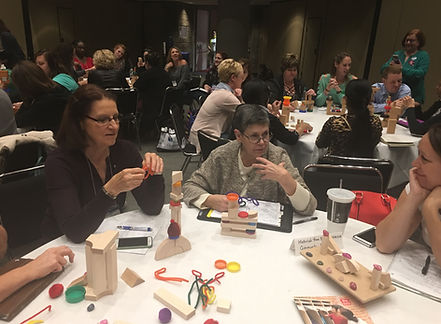
This workshop begins with a PowerPoint presentation with visual examples outlining the benefits of block play for all populations of children, how children develop in their block play, strategies for arranging the block area, and ideas for selecting appropriate building materials, accessories and experiences. In order for teachers to offer block play experiences that are active, engaging, meaningful, social, joyful and inquiry-based, children will need expert guidance. The PowerPoint continues with tips for building on children’s interests and abilities through careful observation. Specific examples from early childhood classrooms will provide ideas for responding with thoughtful feedback, such as providing words of encouragement, describing what children are building, expanding on children’s ideas, pointing out new words or concepts, and asking open-ended questions while being careful not to interrupt children’s engagement in block play. In small groups, participants will engage in open-ended explorations with blocks to experience first-hand the joy of block play, the three-dimensional, sensory qualities of the blocks and the unlimited potential for learning through block play. Using a recording sheet listing different types of feedback responses, teachers will reflect on, discuss and write down one example for each. The workshop ends with a whole group sharing of quality feedback examples for guiding deeper engagement in joyful block play for all children, with time allotted throughout to address questions.
NAEYC Conference, Washington, DC
The Association for the Study of Play &
International Play Association USA,
TASP Conference,
Harrisonburg, VA
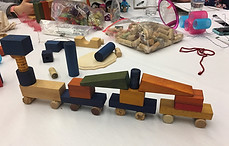
Creative Block Play: Rethink and reimagine possibilities for supporting 21st century skills in your budding engineers, architects, scientists, artists, readers and writers
NAEYC Conference, Atlanta, GA
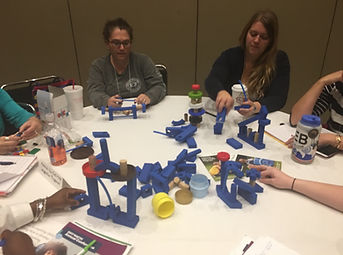
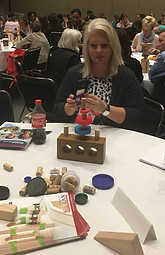
Exploring the 3D World: Creating Optimal Learning Environments & Experiences to Develop Important Spatial & Math Skills
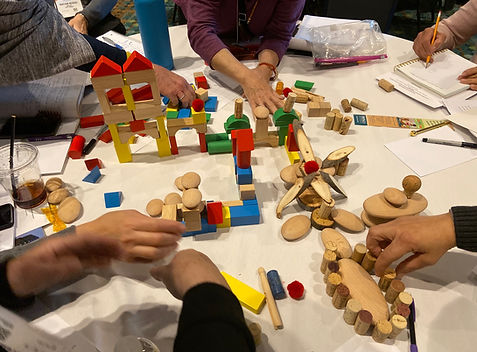
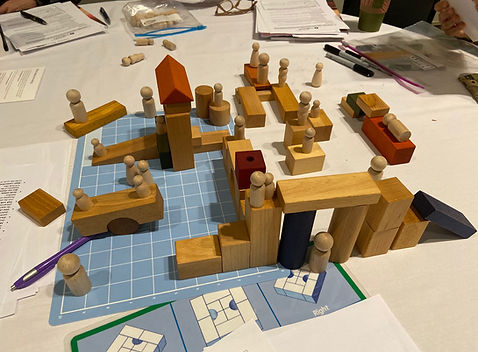
Guiding Deeper Engagement in Block Play: The Role of the Teacher

As workshop participants watch this video, I ask them to listen to the dialogue between my daughter and her husband and their son Dagan. Dagan's father is explaining to his son that the cylinder he is holding in his hand will fall off the small triangle standing with the point up. If he will lay the triangle flat, he can then add another block on top of it. My daughter suggests that Dagan should be allowed to try it and if it falls, “well, then, he’ll learn.” I hear from so many teachers how challenging it is to be involved just enough in children’s block play to support complex thinking or language without taking over or interfering with play. This is truly a skill that takes time to master! I share these tips:
-
Ask open-ended questions. As his dad sat on the floor observing Dagan build, he would ask “What else do you want to put on top?” This suggests to the child that the play is not done yet and can be expanded. For older children, you might ask, “What are some other ways to keep the tower from falling down?” or “What do you think would happen if we took this block out to make a doorway?”
-
Describe and expand on what children say. Just being present while children are playing with blocks and responding appreciatively to their efforts will show children that you value their building. When Dagan squealed “whoa!” with pleasure at the successful placement of a block, his dad echoed his response. With other successful placements, dad would respond with “There you go. Very nice.” and “Awesome.” Sometimes all that is needed is to describe what the child has built. “You balanced on your tippy toes so that you could reach up high to place that last block on top without knocking the whole tower over!”
-
Support language and vocabulary. In another video, my daughter told Dagan he was putting an object “inside” an enclosure. Directional language that is so important in spatial skill development such as “behind”, “in front of”, and “under”, can be learned in context during block play. When children are deeply engaged in their play, they are highly motivated to communicate and try out new words.
-
Point out building elements, concepts and new terms. Providing children with the appropriate term at the moment when they connect it to an action makes the learning more meaningful. For young Dagan, it might mean learning the names and shapes of the blocks or learning to count the number of the blocks at the same time that he is enjoying the process of stacking blocks. For older children involved in a study of buildings, it might include architectural terms like “arches”, “columns”, “dome”, and “skyscraper” or exploring the concepts of balance and gravity. Block play offers children the opportunity to learn many important concepts and terms related to social studies, math, science, engineering, architecture, and construction.